OCMT 2024
-
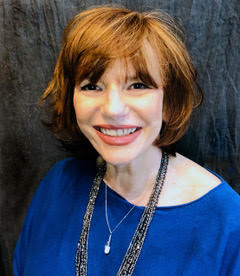
[Keynote] Dr. Indra Selvarajah
Indra Selvarajah, the founding president of the Malaysian Music Therapy Association (MMTA), stands as Malaysia’s pioneer PhD-qualified music therapist. Her doctoral journey led her to Florida State University (FSU), where she specialized in medical music therapy as a government-sponsored scholar. Presently, she holds a position at University Putra Malaysia (UPM) and works extensively with the…
-
Amy Clements-Cortes, Ph.D., RP, MTA, MT-BC, Grace Rogers – “A Comprehensive Music Therapy Approach in Dementia Care”
“Dementia is an overall term for a set of symptoms that are caused by disorders affecting the brain. Symptoms may include memory loss and difficulties with thinking, problem-solving or language, severe enough to reduce a person’s ability to perform everyday activities. A person with dementia may also experience changes in mood or behavior” (Alzheimer’s Society…
-
Nathan Mensah – MA, MT-BC – “Being Alive”-Exploring Benefits of Musical Theatre with Music Therapy for Adolescents in Healthcare Settings
Adolescents have a wide variety of unique musical interests and preferences, including musical theatre. Teens who participate in musical theatre typically identify with these songs for many reasons, including finding themselves in the identity of the characters, and for the strong emotional resonance in songs. Musicals depict a wide variety of topics, including the emotional…
-
Role of Didgeridoo as Part of Music Therapy Intervention to Enhance a Sense of Achievement and Self-Control
The didgeridoo, rooted in ancient Aboriginal Australia, is not merely an instrument. While playing the didgeridoo may seem like a challenge, its therapeutic potential isn’t confined solely to its active play. Even perceptual listening possesses intrinsic therapeutic properties. At its therapeutic core, the didgeridoo engages the respiratory system with its distinct low frequency, vibrations, and…
-
Sharing a Client Across the Country – How We Made It Work for All of Us
This presentation is relevant to music therapists whose clients travel, for whom continuity of care is important. It is relevant for music therapists who would like to collaborate with another music therapist and share the care delivery for their clients. This presentation details the development of an intraprofessional collaboration and client sharing between two Registered…
-
Singing as a Music Therapy Method in Adolescents with Depression
This study will discuss how effective singing is as a music therapy technique for adolescents with depression to improve their emotional and psychological state or possibly manage to heal the patients. This can be achieved through different music therapy techniques that have been analyzed in the literature view of this study. In light of this,…
-
“An Extraordinary Gentleman” – An Off- and Online Music Therapy Journey
This presentation describes the ongoing off- and online individual music therapy process with a middle-aged man with a neurological and short-term memory impairment, as well as partial right-sided paralysis and initial depressive symptoms. At the beginning of the therapy process in 2018, we met ” live ” – offline – for weekly sessions in a…
-
Bringing Back the Simplicity of Music Language to Master Piano Improvisation and Improve Emotional State
Over time lots of complexity layers were added to music to limit people’s creativity. And a simple truth has been forgotten: everyone is musical by nature and everyone can speak a language of music. Our educational system is too focused on developing the “left side of the brain”. In music institutions, children are mostly taught…
-
Music Therapist’s Inner Imagery to Detect Transference and Countertransference in Session: A Systemic and Phenomenological Approach
This paper shows how music therapists can help the client by identifying transference and countertransference signals in sessions. Based on Jungian theory and from a systemic and phenomenological approach, it gives examples of how the therapist’s images, his or her sensations during a session, lapses and memory lapses of both the client and the therapist,…
-
An Unexpected Biomedical Researcher – A Music Therapy Study on Biomarkers in Primipara Lactating Mothers
Music therapy in medical settings is beginning to show a lot of promise. With the evidence based practice of music therapy in obstetrics and gynaecology has brought about support from the interdisciplinary team to take music into pre, peri and post-partum pregnancy. There has been a welcome change in the NICU as well. This presentation…
-
Reliance on Culture Identity and Folklore as a Way to Develop Music Therapy in Our Country
The music of traditional cultures is fixed in the subconscious of humanity. Relying on cultural heritage helps us develop music therapy in Russia. Folklore has performed a therapeutic function since ancient times. This was manifested in the musical accompaniment of the calendar and life cycle. In our presentation we will show how folklore can serve…
-
Dr. Alan Turry, DA, LCAT, MT-BC, Nordoff-Robbins Music Therapist (Keynote)
Alan Turry, DA, LCAT, MT-BC, Nordoff-Robbins Music Therapist, is the Faculty Liaison to the Nordoff-Robbins Center for Music Therapy within New York University’s Steinhardt school. He holds the distinction of being the first music therapist certified to lead a Nordoff-Robbins training course. In his capacity as Managing Director, he oversaw the comprehensive spectrum of responsibilities…
-
Thinking INSIDE the Box: DAW Applications for MT
The advent of Digital Audio Workstations (DAWs) in the 1970s has entirely revolutionized the music industry. Now, more than ever before, beginners and professionals both can make high quality music from the comfort of their homes. Though all music therapists have some level of access to a variety of DAWs, there is still hesitance to…
-
Forever Arriving: The Path of Music Therapy Within Palliative Care Contexts
The specialization of music therapy in palliative care was first introduced by Deborah Salmon at the Royal Victoria Hospital in the late 1970’s in Montreal Canada. Early in the 1980s, 40 music therapists from various parts of the globe gathered for a symposium on using music in end-of-life care in New York. This symposium sparked…
-
Using Vignettes to Change Music Therapists’ Attitudes Toward Research
This presentation will provide the opportunity for listeners to reflect on their own relationships and attitudes toward research and present them with new information about changing attitudes toward research. Listeners will hear about the study’s design, relevance of the topic, steps followed, learn about the findings, and have a discussion about the implications. The findings…
-
Meeting Patient Complexity in the Music Therapy Session
Patient complexity has been a topic of increasing interest as healthcare moves towards a more holistic approach to patient care. While it is helpful to understand patients as members of diagnostically defined groups, patient complexity calls upon providers to take a broader look at the values and needs of their individual patients. Identifying a patient…
-
Our Grief: Disenfranchised Grief of the Therapist
The grief of client loss is not often publicly discussed within music therapy. There are limited articles or publications focused on this topic, even though it is an aspect of professional practice that many, if not all, of us will experience. I believe there is value in naming this shared experience and examining how we…
-
Singing Supervision: Free Associative Singing to Address Issues in Clinical Practice
The focus of singing supervision is to address the complexities involved in helping music therapists in their development as depth-oriented clinicians. Issues like resistance, transference and countertransference are addressed through vocal psychotherapy and in particular free associative singing. In its simplest form “free associative singing” involves the client singing a word or phrase and the…